

AI Artificial Intelligence Is Here
AI, Artificial Intelligence, isn’t science fiction, it’s reality. It has embedded itself, with our help, everywhere. It is reshaping the job market. It is redefining how we learn, diagnose, and even imagine. It’s a brand new world, how should we proceed?
A friend of mine refers to all AI as The Machine. I might use that reference myself in this page. The Machine is now in the driver’s seat. But the real question is, are we passengers or pilots? AI has changed from Science Fiction to Science Fact. Suddenly there are bots that can answer our phones, send emails, make appointments with clients diagnose and treat our illnesses. Now people our worried about losing their jobs to AI and it is a possibility. So what now?
Before The Machine Had a Name
Artificial Intelligence did not begin with ChatGPT, robots, silicon chips, or giant server farms. Long before we had computers, philosophers and mathematicians were already asking questions about thought, logic, memory, and reason. Aristotle studied formal logic. René Descartes questioned the nature of the mind. Charles Babbage designed mechanical computing machines. None of them built modern AI, but their ideas helped create the road that eventually led to it.
The real push toward a thinking machine began when people started asking a simple but powerful question: if human thought follows patterns and rules, could some of those rules be copied by a machine? That question moved from philosophy into mathematics and then into computer science.
Alan Turing – United Kingdom
In 1936, Alan Mathison Turing described the idea of a universal computing machine, now called a Turing Machine. In 1950 he published “Computing Machinery and Intelligence” and asked the famous question, “Can machines think?” His work also led to what became known as the Turing Test, an early way of judging whether a machine could carry on a conversation that seemed human.
John McCarthy – United States
John McCarthy coined the term “Artificial Intelligence” in 1955. In 1956 he helped organize the Dartmouth summer research project, where Marvin Minsky, Claude Shannon, Nathaniel Rochester and others helped establish AI as a serious field of study. The idea of machine intelligence was no longer only philosophy. Scientists were trying to build it.
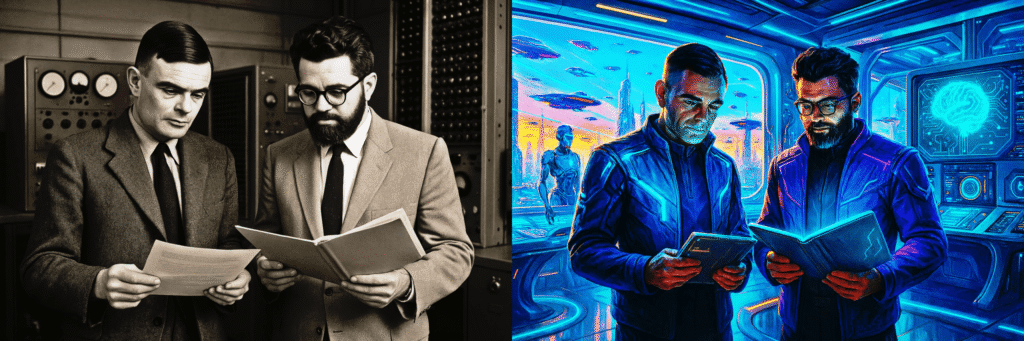
These ideas crossed countries and continents. There was no single inventor of Artificial Intelligence. It grew from the work of philosophers, mathematicians, engineers, psychologists, computer scientists, and people who kept asking whether a machine could copy parts of human reasoning.
The First Wave: Good Old-Fashioned Artificial Intelligence
The first major wave was based on rules and symbols. Programmers told the computer what rules to follow, and the machine worked inside those boundaries. This approach later became known as GOFAI, or Good Old-Fashioned Artificial Intelligence. The name sounds almost funny now, but some of those early systems were remarkable for their time.
Logic Theorist and ELIZA
The Logic Theorist was created in the 1950s by Allen Newell, Herbert Simon, and Cliff Shaw. It could prove mathematical theorems and became one of the first programs to imitate parts of human problem solving. In 1966 Joseph Weizenbaum introduced ELIZA, a chatbot that could imitate a Rogerian therapist. ELIZA did not truly understand people, but some users still felt as if it did.
SHRDLU and MYCIN
SHRDLU appeared around 1970 and could understand written commands about a small world of digital blocks. MYCIN followed in the 1970s as an expert system designed to help identify certain bacterial infections and recommend antibiotics. It showed that a computer could apply stored medical rules to a difficult problem.
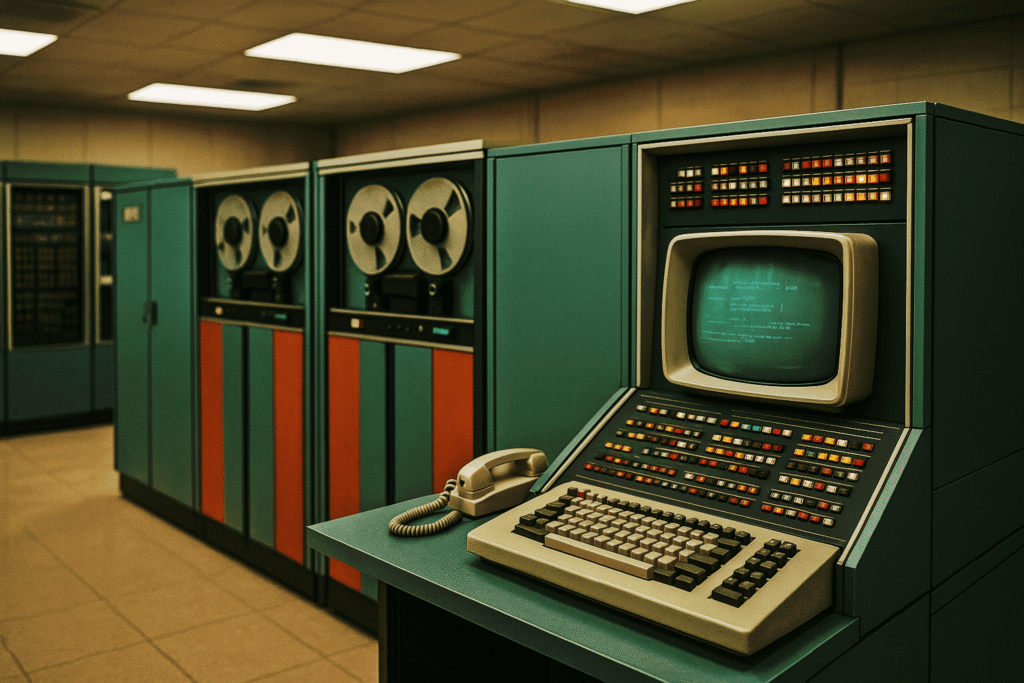
But these systems had a hard limit. They could not learn the way modern systems do. They depended on rules written by people. They could perform well in a narrow, controlled setting and then fall apart when the situation changed. The intelligence looked impressive until the machine was asked to step outside the box its programmers had built.
AI Winters: When the Promises Got Bigger Than the Technology
Excitement grew fast. So did the promises. Governments, universities, and businesses poured money into Artificial Intelligence, but the technology could not keep up with what people expected from it. Funding dried up more than once. These slow periods became known as AI Winters. The first major winter ran through much of the 1970s. Another hit in the late 1980s and early 1990s after many expensive expert systems failed to deliver what companies had been promised.
- Computers were too slow and too expensive.
- Memory and storage were limited.
- There was not enough digital data.
- Many algorithms worked only on small, controlled problems.
- The hype was running far ahead of reality.
The machine did not disappear during those winters. Researchers kept working on pattern recognition, statistics, automation, machine learning, and other pieces of the puzzle. The Machine was sleeping, not dead.
By the late 1990s and early 2000s, several things came together. Computers became much faster. Storage became cheaper. The internet exploded, and with it came a mountain of digital information. For the first time, researchers had enough computing power and enough data to train much larger systems. Instead of trying to write a rule for every possible situation, Machine Learning allowed computers to find patterns in data and improve at a task through training.
Neural networks, loosely inspired by connections in the human brain, became more useful as computing power grew.
Add more layers and more data, and Deep Learning began to show what it could really do. A major breakthrough came in 2012 when AlexNet, a deep neural network associated with Geoffrey Hinton’s research group, crushed the competition in the
ImageNet image-recognition challenge. Machines suddenly became much better at recognizing objects in pictures. That success helped open the floodgates for image recognition, speech recognition, translation, medical imaging, recommendation systems, and many other uses.
Transformers Changed the Game
In 2017, Google researchers published a paper called “Attention Is All You Need.” It introduced the Transformer architecture. That was another turning point. Transformers became very good at working with large amounts of language and understanding how words and ideas relate to each other across a passage. That technology helped lead to the modern Generative AI boom. OpenAI’s GPT models showed how powerful large language models could become.
ChatGPT reached the public in 2022 and suddenly regular people could talk to an AI in everyday language. You didn’t need to know how to program. You could ask a question, request an explanation, brainstorm an idea, work on code, study a subject, or get help with a task by typing what you wanted. At the same time, tools such as Midjourney and DALL-E showed people that AI could create images from written instructions. Other systems began generating music, voices, and video. Artificial Intelligence was no longer hiding behind the scenes. It was sitting right in front of us.
Then AI Stopped Being Just a Chatbot
This is one of the biggest changes since the original version of this page was written in July 2025. We used to think mostly about asking an AI a question and getting an answer. Now AI systems can work with text, pictures, audio, video, computer code, documents, spreadsheets, and other tools in the same conversation. We are also moving into the age of AI agents. An agent can be given a goal, break that goal into steps, use tools, gather information, complete parts of a job, and report back. That does not mean the machine has become a person.
It means software is becoming capable of doing more than waiting for one question at a time. AI is also moving off the screen and into the physical world. Robots are learning to see, move, sort, carry, inspect, and work around people. Cars already use AI-assisted systems. Warehouses use intelligent machines. Farms use automated equipment. Medicine uses AI-assisted imaging and robotic systems. The line between software and machines is getting thinner.
Pop Culture: We Imagined The Machine Before We Built It
Artificial Intelligence did not grow in a vacuum. Movies, books, and television shaped what the public expected from it long before most people ever used an AI system. Sometimes the machine was helpful. Sometimes it was terrifying. Either way, it kept the idea of thinking machines alive in the public imagination.
From Metropolis to Blade Runner
The 1927 film Metropolis showed a robot made to look human. In 1968, 2001: A Space Odyssey gave us HAL 9000, an intelligent computer that could reason, speak, and make deadly choices. Blade Runner, released in 1982, asked what really separates a human being from an artificial one.
From The Matrix to Westworld
The Matrix in 1999 imagined Artificial Intelligence controlling the world and using humans as part of the system. The Creator, released in 2023, went in another direction and explored an emotional relationship between a person and an AI. Black Mirror and Westworld pushed questions about privacy, consciousness, control, identity, and what happens when technology gets ahead of us.
Science fiction did more than entertain us. It gave scientists ideas, made the public curious, created fear, and helped start debates we are still having today. The strange part is that some things that once looked impossible on a movie screen now feel almost normal. The partnership between humans and machines is already part of daily work. AI is strongest when it handles speed, patterns, repetition, and huge amounts of information while a human supplies judgment, experience, taste, responsibility, and common sense.
Journalists can use AI to search large collections of information and spot patterns that could take a person weeks to find. Law enforcement can use computer models to help organize information and deploy resources, but a machine should not replace human judgment or accountability. Architects can create digital models before a building exists. Chefs can experiment with recipes and food pairings. The machine can suggest. The human still decides what is good.
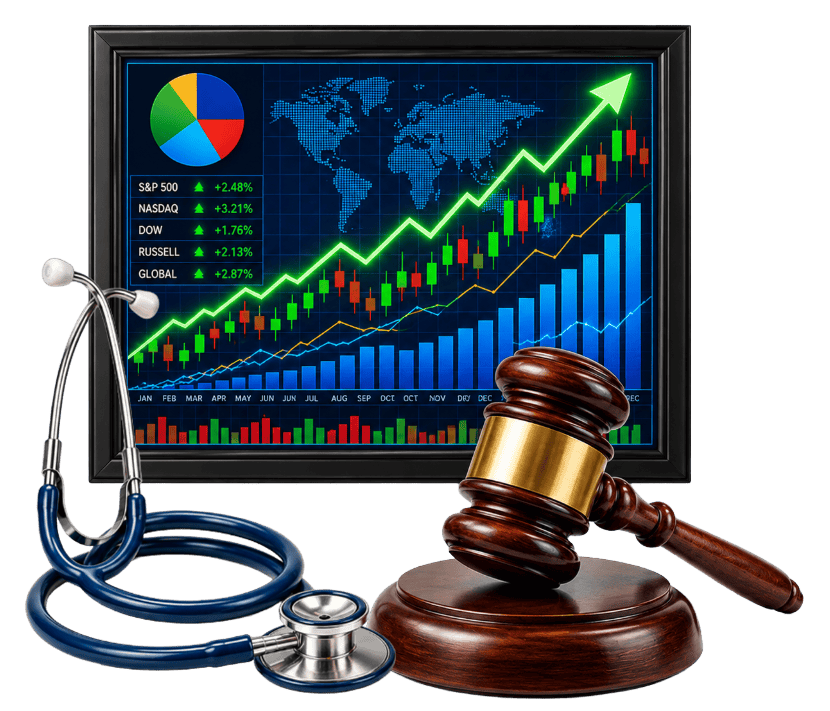
Health, Law & Finance
Healthcare: medical imaging, diagnostics support, robotic surgery, records and research. Legal: document review, legal research, case analysis and large-file searches. Finance: fraud detection, risk modeling, forecasting and trading systems.
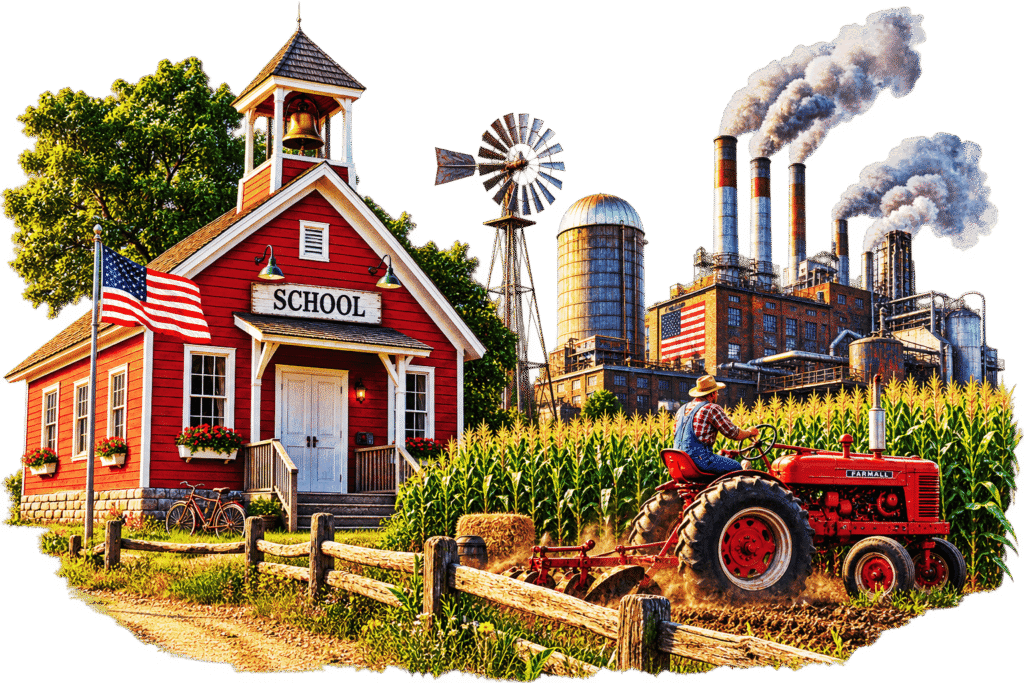
Education, Farms & Industry
Education: tutoring, personalized learning, lesson support and grading assistance. Agriculture: soil and crop monitoring, pest prediction, smart irrigation and autonomous equipment. Manufacturing: predictive maintenance, quality checks, robotics and supply-chain planning.
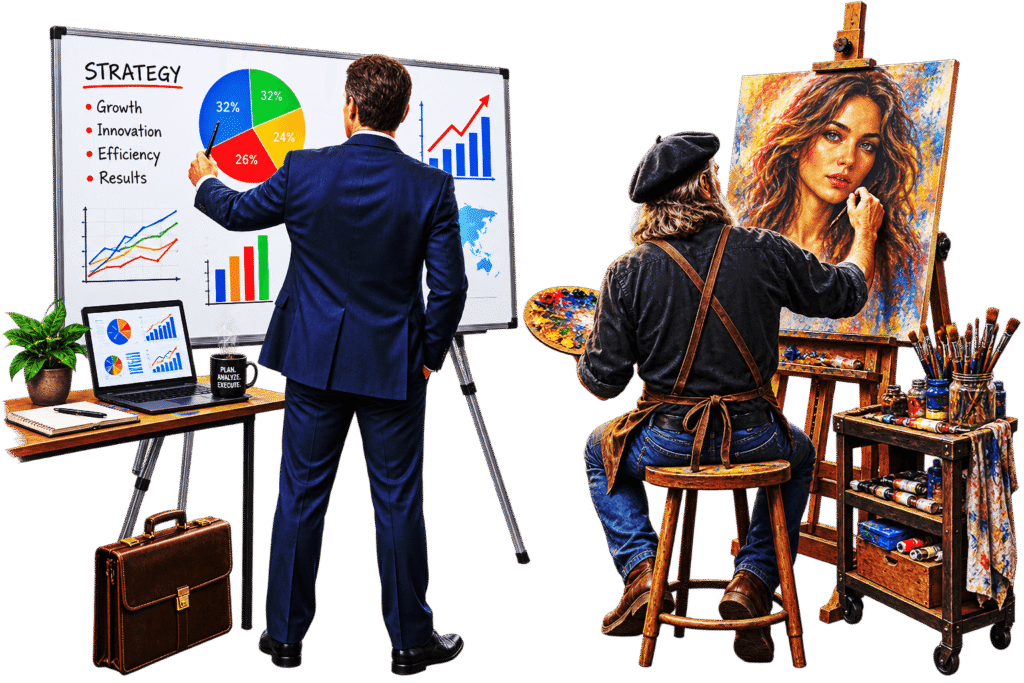
Business & Creative Work
Marketing: research, audience targeting, testing and content assistance. Real estate: property analysis, trend forecasting and customer management. HR: document screening, training and workforce analysis. Entertainment: editing, visual effects, music, video, research and creative assistance.
Artificial Intelligence does not only replace tasks. It reshapes them. Customer service can use chatbots and voice systems. Marketing teams can test ideas faster. Banks can flag suspicious activity in seconds. Teachers can adjust lessons based on student performance. Farmers can watch crops and equipment in real time. Small businesses can automate jobs that once required extra staff or hours of paperwork.
Creative work deserves its own section because this is where people can easily get the wrong idea. AI can help a writer research, organize notes, catch mistakes, test ideas, or speed up parts of the process. It can help an artist explore a concept. It can help a filmmaker edit. It can help a musician experiment. AI is meant to help the creator not become one.
But using a tool is not the same as handing your creativity over to it. If I write a story, the story comes from me. The characters, choices, imagination, and final voice are mine. Technology can help me work faster and better, but I don’t want The Machine replacing the reason I started creating in the first place. That applies to business too. AI can help you prepare information, answer routine questions, compare numbers, and automate boring work. You still need to know what you are doing. A bad decision made faster is still a bad decision.
Will AI Take Our Jobs?
This question has become much more serious. Some jobs will shrink. Some tasks will disappear. New jobs will be created. Most jobs will probably change in some way. Anyone promising that AI will either destroy every job or hurt nobody is guessing. Repetitive office work, basic customer service, routine data entry, simple content production, and predictable digital tasks are easier to automate than work that depends on judgment, physical skill, trust, responsibility, leadership, or human relationships.
Even then, entire jobs are rarely one single task. A machine may take over part of the work while the person takes on something new. Copywriters can use AI to move faster, but someone still has to decide what the message should say and whether it is any good. Developers can use AI to generate code, but architecture, security, testing, and responsibility still matter. Doctors can use AI-assisted tools, but a patient is not a data point. Teachers can use AI, but teaching a child is more than producing an answer.
Right Now
AI is helping assistants, designers, writers, analysts, programmers, teachers, and business owners finish certain tasks faster. Knowing how to give clear instructions to an AI is useful, but understanding the work itself matters more than memorizing magic prompt words.
The Next Several Years
Routine clerical and support work will keep changing. At the same time, people will be needed to train, supervise, test, audit, secure, customize, and manage AI systems. Workers who understand both their profession and the technology will have an advantage.
Longer Term
More complete workflows will be handled by intelligent agents and automated systems. Human work will move toward judgment, strategy, creativity, relationships, oversight, physical skills, and the jobs we have not invented yet.
The internet created jobs such as SEO specialists, social media managers, app developers, online sellers, and digital marketers that barely existed before it. AI will do the same thing. We do not know all the job titles yet. That is exactly why adaptability may be one of the most valuable skills you can have. If you learned how to use email, a smartphone, Google, or social media, you can learn the basics of Artificial Intelligence. You do not need a degree in computer science. You do need curiosity and a willingness to practice.
- Learn the difference between Artificial Intelligence, Machine Learning, neural networks, and Generative AI.
- Learn what a large language model can do and where it can fail.
- Practice giving clear instructions and adding useful details to your requests.
- Try tools such as ChatGPT, Claude, Gemini, Copilot, image generators, and other AI systems that fit your work.
- Use AI on small real tasks instead of only reading about it.
- Automate simple, repetitive work first.
- Check important answers instead of blindly trusting them.
- Keep learning because the tools are changing fast.
YouTube tutorials, interactive lessons, online communities, and the AI systems themselves can help you learn. Ten minutes a day is enough to start. Ask questions. Make mistakes. Try again. The goal is not to know everything. The goal is to understand enough that you are using The Machine instead of being confused by it. More power means more responsibility. AI systems are trained on huge amounts of data, and that brings questions that cannot be ignored. Where did the information come from? Who owns it? Is it accurate? Does the system treat people fairly? What happens when private information gets fed into it? Who is responsible when the machine makes a serious mistake?
Bias is not a made-up problem. If a system learns from biased information or is designed badly, it can repeat or even increase those problems. Facial-recognition systems have made mistakes. Automated hiring systems have raised discrimination concerns. Medical, financial, legal, and law-enforcement uses can affect real lives, so human oversight matters. Then there are deepfakes, cloned voices, fake photographs, fake video, scams, and misinformation.
AI has made it easier to create convincing material that never happened. We now have to ask a question our parents and grandparents rarely had to ask when they saw a photograph: Is this even real? Transparency, accountability, privacy, security, and fairness cannot be decorations added after an AI system is built. They have to be part of the design and part of the way we use it.
Who Controls The Machine?
Another question has become more important as AI grows: who controls it? A small number of large companies are building some of the most powerful systems in the world. At the same time, open-source developers, universities, researchers, governments, watchdog groups, small companies, and independent builders are pushing in different directions. There is no simple answer.
Open systems can give more people access and encourage innovation, but powerful technology can also be abused. Closed systems may offer stronger controls in some areas, but they place more power in fewer hands. We need more people involved in the conversation, not fewer. Understanding AI means more than knowing which button to push. We need to know enough to question its decisions, recognize its limits, protect our information, and decide when a human being should stay in control.
Artificial Intelligence began as an idea in the minds of human beings. Today it lives in our phones, computers, businesses, hospitals, schools, cars, homes, and creative tools. Tomorrow it will be in even more places. But it still needs something from us.
Your Questions
AI can produce answers, but a human still has to know what is worth asking.
Your Ethics
A machine can follow rules. Human beings have to decide what those rules should be and when they should change.
Your Imagination
AI can remix patterns it has learned. People still decide what they want to build, discover, tell, improve, or create.
The Road Ahead Is More Than Technology
Artificial Intelligence has moved far beyond circuitry and code. It is becoming part of how we work, learn, create, communicate, shop, travel, build businesses, and solve problems. That means the future of AI is not being written only by scientists in a laboratory. It is being written by teachers using new tools with students. By doctors deciding when an AI result should be trusted. By artists deciding where technology belongs in their work. By business owners deciding what to automate. By programmers building new systems. By parents trying to understand what their children are using. And by regular people deciding whether to learn what is happening or ignore it.
You do not have to know everything. Nobody does. You need to be willing to learn something new and keep learning. This is one of those rare times in history when ordinary people can get ahead simply by paying attention, trying the tools, asking questions, and refusing to hand over their judgment.
The real danger is not that Artificial Intelligence suddenly wakes up tomorrow and takes over the planet. The danger right in front of us is that the world changes while we refuse to change with it. Start using the tools. Ask ChatGPT or another AI something useful. Try an image generator. Use AI to help organize a project. Let it explain something you have never understood. Give it a task and see where it succeeds. More important, see where it screws up. Ask questions. Break stuff. Fix it. Try again. That is how you learn.
Do not turn your brain off because the machine can produce an answer in two seconds. Do not give up your creativity because it can make something faster. Do not trust it simply because it sounds confident. Learn its strengths. Learn its weaknesses. Make it work for you. A friend of mine calls AI The Machine, and I think the name fits. The Machine is already here. It is getting faster, smarter, and more useful. It is also becoming harder to avoid. So we come back to the question we started with. Are we passengers or pilots? I know which one I intend to be.