
Papyrus The Amazing Keeper Of Our Words
Papyrus Keeper Of The Written Word For Thousands Of Years
Long before we had books, newspapers, computers, or even paper as we know it today, people had something to say. Then there was papyrus. They had stories to tell, laws to record, business to conduct, and knowledge they wanted to pass from one generation to the next. The problem was finding a good way to write it all down.
Stone lasted a long time, but carrying a stack of stone tablets around was not exactly practical. Clay tablets worked better, but they were still heavy and could break. Animal skins could be written on, but they took time and work to prepare. Then, thousands of years ago, people living along the Nile River found an answer growing right in front of them. It was a tall green plant called papyrus, and it would help change the way humans recorded their world.
Papyrus Was Plentiful
Papyrus grew in the wetlands along the Nile, especially in the shallow water around the river and its marshes. The plant could grow several feet tall, with a thick triangular stalk and a crown of thin green stems at the top. To us, it might not look like something that could become a writing surface. To the ancient Egyptians, however, papyrus was an extremely useful plant. They used it to make baskets, ropes, sandals, mats, and even small boats. But its most famous use came when Egyptians learned how to turn the inside of the stalk into thin sheets that could be written on. That simple idea helped preserve thousands of years of human history.

Making papyrus took patience and skill. Workers cut the stalks and removed the tough green outer layer. Inside was a softer, pale material called the pith. This inner material was sliced into long, thin strips. The strips were placed next to each other in a row, and another layer was placed across the first at a right angle. The two layers were then pressed together. Moisture and natural substances inside the plant helped the strips stick together. After the sheet dried, its surface could be rubbed and smoothed until it was ready for writing. Several sheets could be joined together to create a long roll.
Think about that for a moment. Someone standing beside the Nile thousands of years ago could cut down what looked like a large marsh plant and turn it into something we would recognize as a page. There were no factories, electric presses, or modern chemicals involved. It was done by hand, one sheet at a time. Yet some of those sheets survived long enough for people living thousands of years later to read the words written on them.
That is where papyrus becomes much more than an old writing material. Papyrus gave people a way to send their thoughts into the future.
Ancient Egyptian scribes used papyrus for almost everything that needed to be recorded. They wrote letters, business records, tax information, legal agreements, religious writings, medical information, and government documents. They recorded stories and instructions. They kept track of supplies and payments. Officials could send written orders from one place to another. Merchants could record business deals. Families could write letters. Priests could preserve religious texts. Doctors could record what they knew about illnesses and treatments. A civilization that could write things down did not have to depend entirely on someone’s memory.
Being a scribe was an important job. Reading and writing were not skills everyone had. A trained scribe might spend years learning the symbols and methods needed to record information correctly. Scribes worked for temples, government offices, military leaders, wealthy families, and businesses. Their tools were simple compared with what we use today. A scribe might carry a palette for ink, reed pens, and sheets or rolls of papyrus. Yet those simple tools gave the scribe something very powerful: the ability to preserve words.
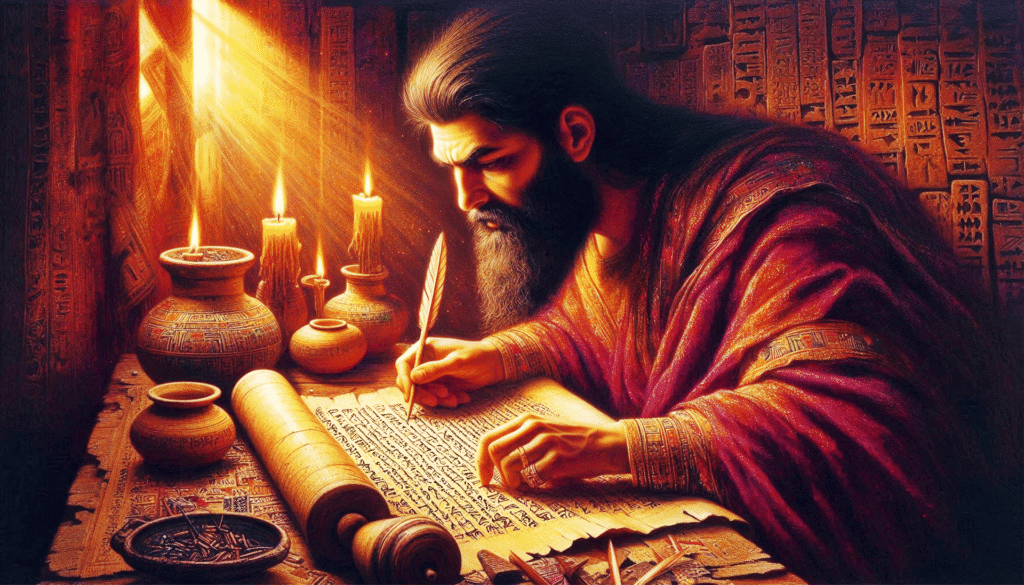
The ink used on papyrus was also surprisingly effective. Black ink was commonly made using carbon, often from soot, mixed with other ingredients. Red ink was sometimes used for headings, important names, warnings, or special sections. A reed could be cut and shaped into a writing tool, dipped into the ink, and used much like a pen. The equipment may have been simple, but the result could last for centuries when the papyrus was stored in the right conditions.
Papyrus also changed how much information could be carried. Imagine trying to move a long story written on stone. You might need a wagon. Put the same amount of information on papyrus and you could roll it up and carry it under your arm. That was a huge change. Written information became easier to store, move, copy, and trade. Messages could travel farther. Records could be collected in one place. Large amounts of knowledge could be saved without filling entire rooms with stone or clay.
Eventually, papyrus moved far beyond Egypt. It became an important writing material throughout much of the Mediterranean world. Greeks used it. Romans used it. Government officials, merchants, scholars, writers, and religious leaders all depended on it. As trade expanded, papyrus became a valuable product. Egypt had a major advantage because the plant grew so well around the Nile, and papyrus became closely connected with learning, government, and communication across the ancient world.
Many famous works from the ancient world were originally written or copied onto papyrus. Literature, philosophy, mathematics, religious writings, government records, and personal letters all found their way onto papyrus sheets and rolls. Some were important documents created for kings and officials. Others were ordinary notes written by ordinary people. Today, those everyday writings can sometimes tell us just as much about the past as the grand documents do.
A shopping list may not sound important when someone writes it. A personal letter may seem meaningful only to the person receiving it. A receipt might be thrown into a drawer and forgotten. But give those things a couple thousand years and suddenly they become windows into another world. They can tell historians what people bought, what things cost, what names they used, where they traveled, how they worked, and what they worried about. They remind us that people living thousands of years ago were still people. They had jobs, families, debts, arguments, hopes, and plans for tomorrow.
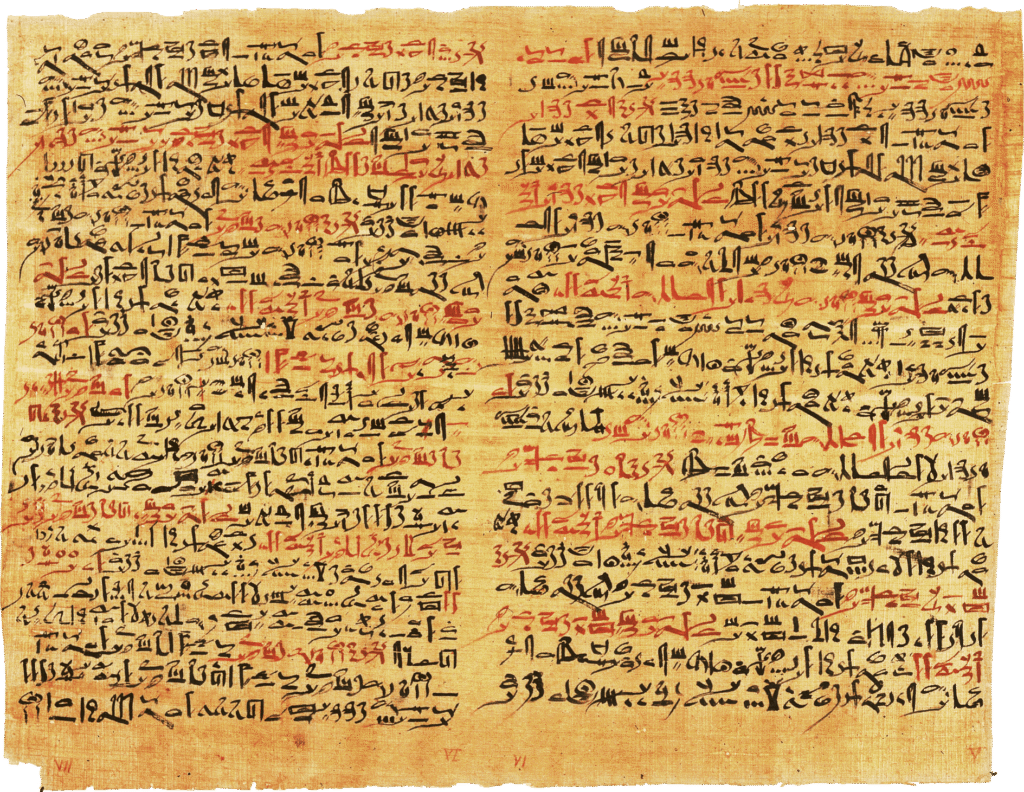
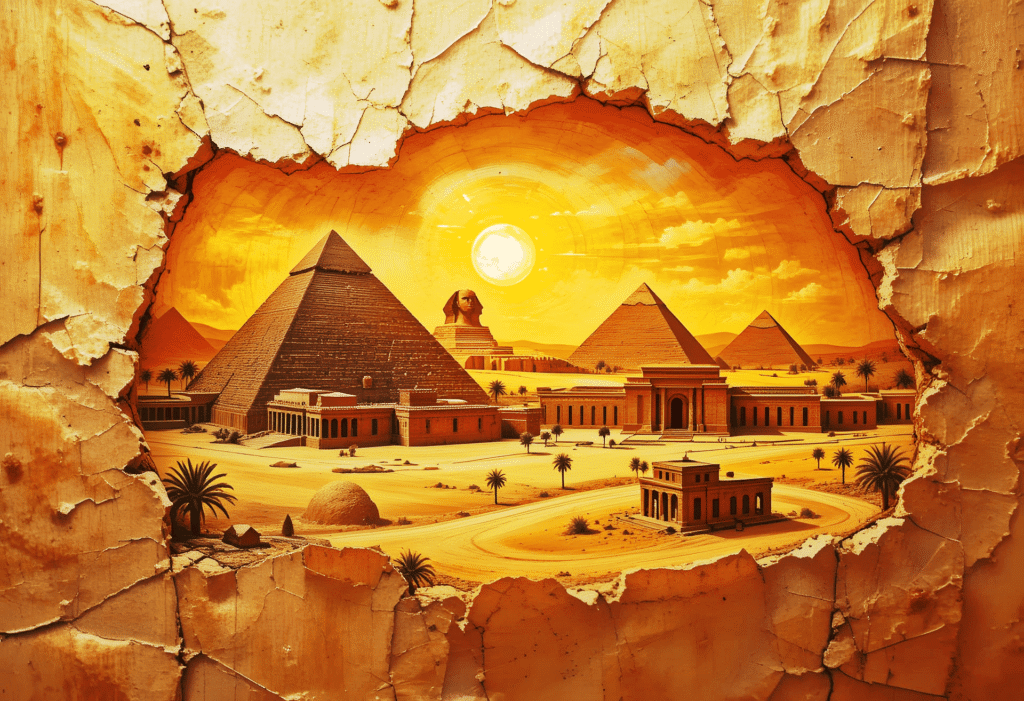
Of course, papyrus had weaknesses. It did not like moisture. In wet climates it could rot and fall apart. Insects could damage it, and rough handling could destroy it. One reason so much Egyptian papyrus survived is the dry climate. Sand, tombs, caves, and other protected locations sometimes kept papyrus away from moisture for centuries. In other parts of the ancient world, many papyrus documents disappeared because the climate was not nearly as friendly.
The papyrus scroll itself also had limits. A long work could require a very long roll. Finding one particular section meant unrolling part of the scroll while rolling up another part. Anyone who has searched through a long video trying to find one exact moment can probably understand the problem. The information was there, but reaching the exact part you wanted could take some work.
Over time, another form began to become more common: the codex. Instead of one long roll, sheets were placed together and bound along one edge. In other words, it began to look like a book. A reader could open it to different sections much more easily, and writing could be placed on both sides of a page. The codex would eventually help lead to the form of the modern book.
Other writing materials also became more popular. Parchment, which was made from prepared animal skin, was strong and could be used on both sides. Much later, paper-making methods that developed in China spread westward. Paper could be produced in large amounts and eventually became cheaper and easier to obtain. Papyrus slowly lost the position it had held for so long.
But it never really disappeared from history.
Even the word “paper” is connected to the long story of papyrus. The two materials are not made the same way, but their names remind us of that ancient writing surface every time we talk about putting something on paper. More important, the idea behind papyrus never disappeared. Human beings wanted a surface that was light, portable, and easy to write on. Papyrus helped provide that thousands of years before notebooks, printing presses, or office printers existed.
What makes papyrus especially interesting today is how familiar its purpose still feels. The technology has changed, but the reason for using it has not. An Egyptian scribe recording grain supplies and someone entering numbers into a spreadsheet are doing the same basic thing: saving information. A person writing a letter on papyrus and someone sending an email are both trying to communicate across distance. A storyteller writing on a scroll and a novelist publishing an eBook are both trying to place words in front of another human being.
We tend to think of digital communication as something completely new, and the technology certainly is. But the desire behind it is ancient.
Every major change in writing technology has made information easier to create, copy, store, or share. Papyrus made writing portable. The codex made written works easier to organize and read. Paper made written material easier and cheaper to produce. The printing press allowed thousands of nearly identical copies to be created. Computers made it possible to create, edit, and copy information almost instantly. The internet allowed that information to travel around the planet in seconds.
Today, a book can exist without a physical page at all. An eBook can contain tens of thousands of words and weigh nothing. A person can carry hundreds or even thousands of books on a device small enough to hold in one hand. A writer can finish a book in Arizona and a reader in Australia can have a copy minutes later. To someone living in ancient Egypt, that would probably look like magic.
But take away the screens, batteries, and internet connections, and something very old remains underneath it all.
Words.
That is the real story of papyrus.
The Egyptians who developed and improved papyrus were not simply creating something convenient to write on. They were helping build a bridge between human thought and human memory. A spoken sentence disappears almost as soon as it is said. A written sentence can remain after the person who wrote it is gone. When enough of those sentences survive, they become history.
Without written records, much of what we know about ancient civilizations would be guesswork. Buildings and artifacts can tell us a great deal, but writing lets people from the past speak for themselves. We can read their laws. We can study their medicine. We can see their mathematics. We can read their prayers, stories, contracts, and letters. We can discover what rulers ordered and what ordinary workers were paid. Sometimes we can even read the complaints of someone who was having a very bad day several thousand years ago.
There is something remarkable about that.
Picture a scribe sitting near the Nile thousands of years ago. Beside him are a few sheets of papyrus. In his hand is a simple reed pen. He dips it into black ink and begins making marks across the surface. He has no idea who might eventually read those words. He certainly cannot imagine computers, smartphones, digital libraries, or people studying photographs of his writing on glowing screens thousands of years in the future. To him, he is simply writing something down. Yet those marks may survive kings, wars, empires, languages, and entire civilizations. The person disappears. The city changes. The world moves forward. The words remain.
From a green plant growing along the banks of the Nile came one of humanity’s most important tools. Papyrus carried laws and legends, prayers and payments, medicine and mathematics, government orders and private thoughts. It traveled across kingdoms and empires. It helped knowledge survive long enough to be copied onto newer materials, placed into books, printed on paper, and eventually stored as digital information.
The screen you are reading today may seem about as far removed from ancient papyrus as anything could possibly be. In reality, they are part of the same journey. Both exist because human beings have always wanted to do something extraordinary. We want to leave our words behind. For thousands of years, papyrus helped us do exactly that.