

Building Minds With LEGO: A Transformative and Inspiring Journey
LEGO®, Building Minds, because that is what it does. Children don’t see it quite that way, they just want to build something that looks cool. I don’t think that there is an American, or just about anyone else on the planet who doesn’t know the word LEGO.
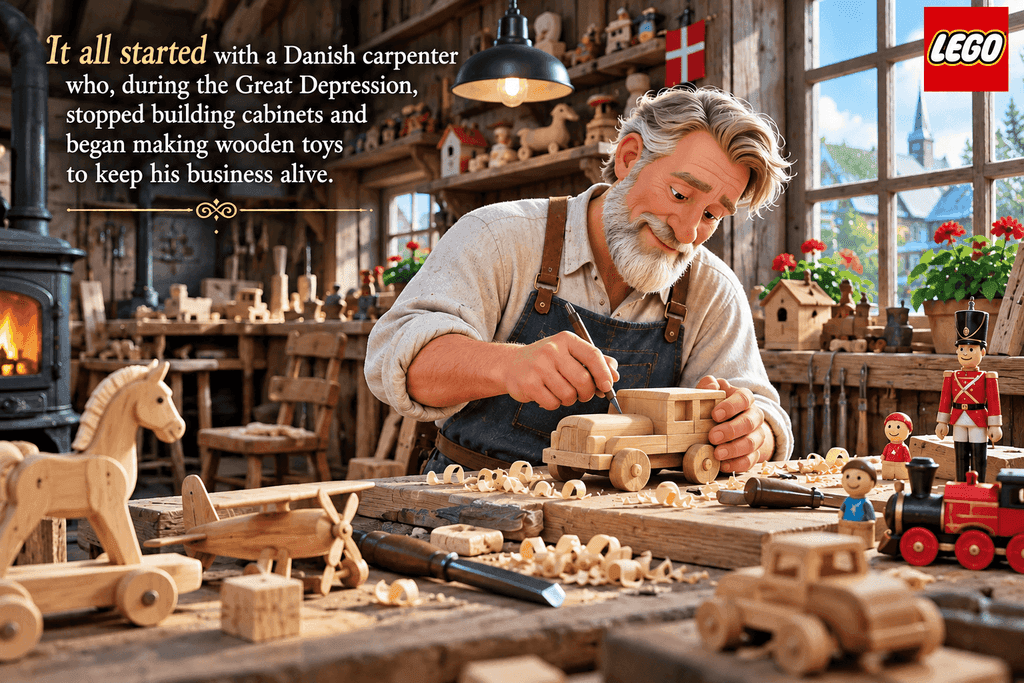
In 1932, during the Great Depression, a Danish carpenter named Ole Kirk Christiansen was struggling to keep his business alive in Billund, Denmark. You’re never gonna guess how. Ok, maybe you will. Ole used to build houses and make furniture but that dried up during the Depression. So in 1934 Ole named his company, “The Lego Group“. The name came from the Danish words “leg godt” meaning “play well.” Good words, and with those words you knew this guy has kids. He had four sons, Johannes, Karl, Godtfred, Gerhardt. So the company was off but at that time they were working in wood. It wasn’t until the end of World War II that industry switched from wood to plastic.
Lego Goes From Wood To Plastic
In 1949 Ole and his son Godtfred came up with the plastic brick that we all love, they were called automatic binding bricks. A few years later 1958 it was patented. The genius is the underside tube system that allowed the bricks to lock in place, taken apart and put back together. What I didn’t know and thought was pretty cool, is that today’s block will click and lock with any LEGO® block from 1958. That right there is not an accident. That is long-term thinking. Most companies change their products every few years.
New design. New model. New version.
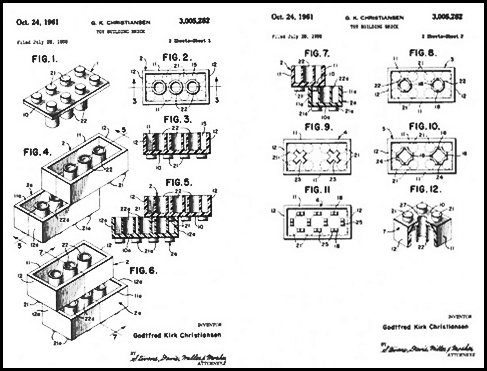
LEGO® did the opposite. They made a brick that worked, and they never changed the connection system. That small decision created something powerful.
If you built with LEGO® in 1965, those bricks still connect today. That means a grandfather can dump out an old box from the attic and build with his grandson using the same pieces. That kind of continuity builds more than toys. It builds memory.
In the 1960s, LEGO® made another smart move. They stopped selling individual toys. Instead, they sold “The LEGO® System.” Every set connected to every other set. A fire station wasn’t just a fire station. It was part of a city. A castle wasn’t just a castle. It was part of a kingdom. That thinking changed how people bought LEGO®. It was no longer a one-time purchase. It was an expansion. That created repeat customers without forcing it. Kids naturally wanted to add more. Parents didn’t feel like they were buying throwaway toys. They were building something that lasted.
In 1968, the company tried something bold. They opened the first LEGOLAND® in Denmark. A toy company building a theme park sounded crazy. But it made sense. LEGO® builds worlds. So why not let people walk inside those worlds? It worked. LEGOLAND® became more than rides. It became experience. You walk through cities built from millions of bricks. You see landmarks recreated in tiny detail. It feels playful and serious at the same time. That expansion proved something important. LEGO® was not just a product. It was a brand ecosystem. But not everything was smooth.
LEGOLAND® Is Here
In the late 1990s, LEGO® almost failed. Video games were exploding. Kids were glued to screens. Attention spans were shrinking. LEGO® expanded into too many side projects. Costs went up. Profits went down. Bankruptcy was a real possibility. That could have been the end. Instead of panicking, the company simplified. They cut distractions. They focused on the brick. They tightened operations. And then they made one of the smartest business decisions in toy history.
They partnered with Star Wars in 1999. That move brought in collectors. Adults. Movie fans. It pulled in people who had never bought LEGO® before. Soon after came partnerships with Harry Potter, Marvel, and DC. Now LEGO® was not just building houses and castles. It was building stories people already loved. That licensing strategy saved the company. But something else was happening quietly. Adults were coming back.
New Builds Means New Customers, Adults Are Here

LEGO® began designing sets for older builders. Architecture. Technic supercars. Botanical collections. Massive builds with thousands of pieces. These were not quick builds. They required time and focus. And that brings us to the real reason I wanted to write this page. LEGO® builds the mind. Kids do not think about it that way. They just want to build something cool. But what is really happening when they sit on the floor with a pile of bricks?
When you build a LEGO® set, you are constantly making small decisions. Does this piece fit? Is it aligned correctly? Did I skip a step? That is pattern recognition. That is logic. It is brain work disguised as play.
Unlike screens, LEGO requires active thinking. A video game can guide you. A show can entertain you. But LEGO® forces you to participate. You cannot scroll your way through a LEGO® build. You have to pay attention. There is something else important here. Focus. We live in a world of notifications. Alerts. Endless feeds. Fast dopamine hits. LEGO® slows you down. You sit. You sort pieces. You follow steps. You correct mistakes. You rebuild.
- They are solving problems.
- They are reading visual instructions.
- They are learning sequence.
- They are practicing patience.
- They are developing fine motor skills.
- They are training spatial awareness.
That kind of focused activity is rare now and focus strengthens the brain. There is a term people use today called “flow state.” It is when you are fully absorbed in a task. Time disappears. You are not stressed. You are not distracted. You are simply engaged. LEGO® creates that state naturally. You start building. An hour passes. You did not check your phone. You were not anxious. You were just building. For kids, that helps with attention development. For adults, it helps with stress. For older adults, it may help maintain cognitive sharpness. I am not saying LEGO® is medicine. I am saying it keeps the brain working. And that matters.
Imagination And Creativity
Think about this. When you follow a LEGO® instruction manual, you are reading diagrams. You are translating 2D images into 3D structures. That requires spatial reasoning. The brain must rotate objects mentally and understand position. That is not passive. That is exercise. Fine motor skills matter too. Picking up small pieces, aligning studs, pressing them into place. That coordination between hand and eye strengthens neural pathways. It sounds simple. It is not.
There is also creativity. Once you finish a set, you can modify it. Combine it. Tear it down and build something new. That open-ended possibility trains imagination. You are not just copying. You are designing. For kids, that builds confidence. They look at something and think, “I made that.” For adults, it reconnects them to problem solving without pressure. For grandparents, it creates shared experience. That is something we need more of.
Picture three generations at a table. No screens. No politics. No noise. Just a pile of bricks and a build in progress. That is rare now. LEGO® survived for over 90 years because it does something that technology does not replace. It engages the hands and the mind at the same time. And here is something else that makes it unique. Durability.
- They Click.
- They Hold.
- They Come Apart.
- They Rebuild.
LEGO® bricks do not wear out easily. They do not become outdated because of software updates. They do not stop working because the internet is down.
In a disposable culture, that permanence stands out. That permanence also created a collector market. When a LEGO® set retires, production stops. Some sets never return. That creates scarcity. And scarcity creates demand. Collectors pay attention to condition. Complete piece count. Original manuals. Authentic parts. Not every set increases in value. But many discontinued sets become desirable over time. That secondary market is proof that LEGO® is more than a toy.
It is an asset class for some. It is nostalgia for others. It is brain training for many. There is also something else people forget. LEGO® is quiet. There are no batteries required for most sets. No sound effects. No flashing lights. The experience is manual. You build the excitement yourself. That self-generated engagement is powerful. It does not rely on outside stimulation. It relies on your own imagination. And imagination is a muscle. If you do not use it, it weakens. If you use it often, it grows.
LEGO® keeps that muscle active. Now let’s talk about longevity. As we age, cognitive strength becomes important. Memory. Focus. Problem solving. Many people assume that decline is automatic. But mental stimulation plays a role in maintaining function. LEGO® challenges the brain in small, manageable steps. You are not studying for an exam. If you want to challenge your brain take a look here. These Sets are Retired.
LEGO® challenges the brain in small, manageable steps. You are not studying for an exam. You are building a model. But your brain is working the entire time. And unlike high-stress mental tasks, LEGO® feels relaxing. That combination is rare. It is structured but creative. It is guided but flexible. It is calm but engaging. That balance may be one of the reasons adult LEGO® sales continue to grow. People are looking for something physical. Something real. Something that requires their attention.

When you snap two bricks together, there is feedback. You feel it. You hear the click. That sensory feedback reinforces action. That is satisfying. And satisfaction builds habit. Maybe that is why LEGO® still works. It did not chase trends. It did not reinvent the connection system every decade. It refined it. It stayed consistent. It adapted through licensing and expansion, but it never abandoned the core brick. That kind of discipline is rare in business. From a small woodworking shop in 1932 to global theme parks and licensed empires, LEGO® built its success piece by piece. Not through hype. Not through shortcuts.

Through system thinking. Through durability. Through imagination. And through the simple idea that play matters. Children may not think about brain development when they dump out a box of bricks. Adults may not think about cognitive longevity when they build a botanical set. But the mind is working. Connections are forming. Focus is sharpening. Creativity is stretching. And in a world that moves fast and forgets quickly, something that slows you down and makes you think is worth paying attention to.
They are just blocks, but they are also tools:
- That build cities.
- Build stories.
- Build patience.
- Build memory.
- Build minds.
And maybe that’s why, after more than ninety years, the click still matters.