eBooks, Amazing Technology Big Changes
eBooks, Changing The Way The World Reads
eBooks have changed the way the world reads, and they did it without asking anyone’s permission. For centuries, it meant holding a printed book.
For most of the history of books, reading meant getting your hands on an actual physical object. You went to a bookstore. Maybe you ordered a book through the mail. Maybe you went to the library and hoped the one you wanted was sitting on the shelf. If it wasn’t, you waited. Remember waiting? The bookstore might order it. The library might get it from another branch. Either way, somehow that book had to physically travel from
wherever it was to wherever you were. Somebody printed it, packed it, shipped it, unpacked it, put it on a shelf, and eventually you got your hands on it.
For most of the history of books, reading meant getting your hands on an actual physical object. You went to a bookstore. Maybe you ordered a book through the mail.
Reading eBooks Saves Trees If You Think About It
Maybe you went to the library and hoped the one you wanted was sitting on the shelf. If it wasn’t, you waited. Remember waiting? The bookstore might order it. The library might get it from another branch. Either way, somehow that book had to physically travel from wherever it was to wherever you were. Somebody printed it, packed it, shipped it, unpacked it, put it on a shelf, and eventually you got your hands on it.
Today you can finish a book at midnight, decide you want the next one, find it online and start reading a few minutes later. No bookstore has to open. No truck has to arrive. Nobody has to check the stockroom. The book just shows up. We’ve gotten so used to that little bit of magic that we don’t even think it’s magic anymore. An entire library can fit on something small enough to carry in your pocket.
Millions of books can move around the world without a printing press, warehouse, delivery truck, or a single new piece of paper. A book can cross an ocean faster than you can make a cup of coffee. Try explaining that to somebody from 1950. Actually, you don’t have to go back that far.
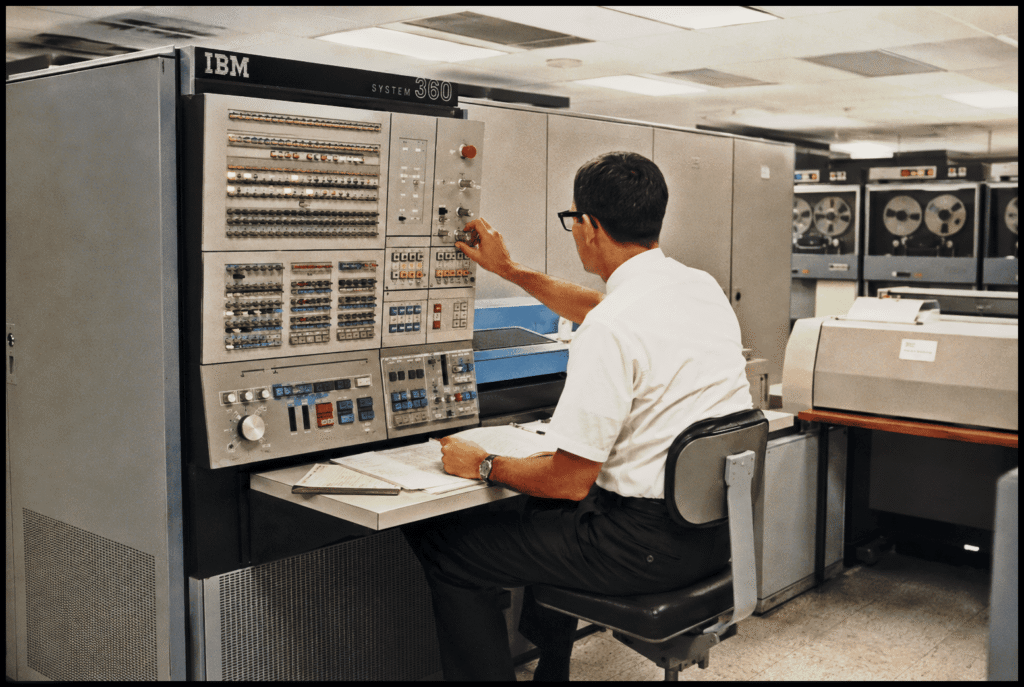
EBooks are older than most people probably think. It didn’t begin with the Kindle, smartphones, or tablets. Back in 1971, University of Illinois student Michael Hart was given access to a powerful mainframe computer. These weren’t the little machines we carry around today. Computers were enormous, expensive things, and most people had never touched one. Hart looked at one and saw books. That’s the part I like. Everybody else is looking at this giant computer and thinking numbers, calculations, research, whatever giant computers were supposed to do in 1971. Hart realized the machine could also store words.
His first electronic text was the United States Declaration of Independence. That simple electronic document became the beginning of Project Gutenberg. At the time, the whole idea probably sounded a little nuts. There was no Wi-Fi. No smartphone. No tablet. No little eReader you could throw in your backpack. There wasn’t even much of a reason for the average person to want an electronic book because most people didn’t have anything convenient to read one on.
Hart was early. Really early. But he understood something important. Once words became digital, another copy didn’t require another sheet of paper. You didn’t need more ink. You didn’t need another shelf. The information could be copied again and again without physically manufacturing another book.
Project Gutenberg kept growing. Slowly at first, because the rest of the world had some catching up to do. Then it caught up. Computers moved into homes. The Internet followed them. Laptops became smaller. Smartphones put computers in our pockets. Tablets gave us screens big enough to comfortably read on, and dedicated eReaders finally gave electronic books a device that actually felt like it was meant for reading. Suddenly the eBooks made sense.
You didn’t have to sit at a desk staring at a computer monitor anymore. You could read on the couch, on an airplane, in a doctor’s waiting room, sitting on the beach, or lying in bed at two in the morning. Which is dangerous. Two in the morning has probably produced more bad decisions involving the words “one more chapter” than anybody will ever know. A traveler can carry twenty books without adding twenty pounds to a suitcase. Somebody waiting for an appointment can pull out a phone and read five pages. You can start reading on one device at home and continue somewhere else. The book goes where you go.
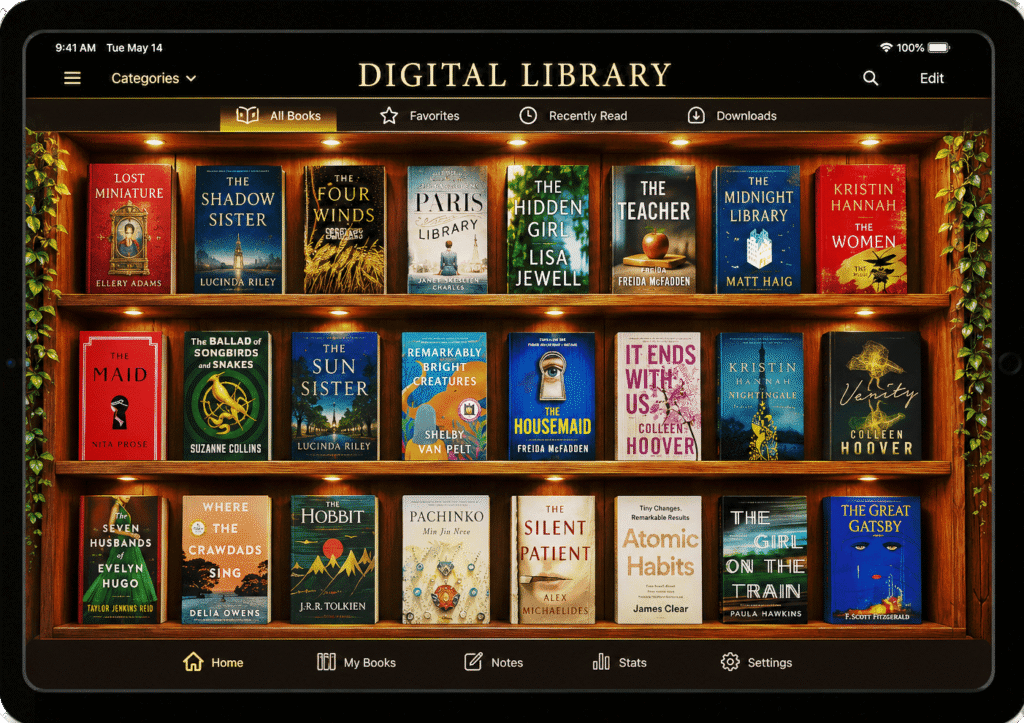
Then something else quietly disappeared. Closing time. An online bookstore doesn’t particularly care that it’s three o’clock in the morning. Search for a mystery, science fiction novel, history book, cookbook, biography, or whatever strange subject suddenly seemed fascinating at 3:07 a.m., and there’s a pretty good chance you’ll find something. A few taps later, you’re reading it. Think about what kind of bookstore that really is. Millions of titles. No shelves. No cash register. No boxes piled in the back room. No delivery truck at the loading dock. Open twenty-four hours a day, and the customer doesn’t even have to put on shoes. That’s not a small change.
It changed us too. Somebody mentions a good book over dinner and we don’t have to write the title down and hope we remember it next Saturday. We can find it before dessert shows up. We started expecting books to be available immediately because, most of the time, they are. Readers gained something else along the way: control over the page.
A printed book pretty much tells you how things are going to be. The publisher picked the typeface and the size. If the letters are too small, that’s unfortunate. Find your glasses. eBooks are different. Depending on the device or reading app, readers can enlarge the letters, shrink them, change the font, adjust line spacing, change brightness, or switch the background. Those may sound like little conveniences until you’re the person who needs them.
For an older reader or somebody with limited vision, bigger letters can make the difference between comfortably reading and not reading at all. Other people simply find certain fonts or screen settings easier on their eyes. The printed page says, “Here you go.” The eBooks say, “How do you want it?”
Writers got dragged into this revolution too, and this is where things really started getting interesting. For a long time, somebody could spend years writing a book and still need another person’s permission before readers ever got a chance to see it. Publishers could only release so many titles. Bookstores only had so much shelf space. Somebody had to decide which manuscripts got through. Thousands didn’t. Some of those manuscripts were probably awful. Come on. They couldn’t all be undiscovered masterpieces. But some of them were good. Maybe some were brilliant. We’ll never know because the reader never got to decide. The book never reached them.

eBooks helped punch a hole through that wall. An independent author can now write a book, have it edited, create a cover, format it, publish it, and make it available to somebody on the other side of the planet without having a warehouse on either side of the planet. That’s ridiculous when you think about it. A physical book has to exist somewhere. It has to be printed, stored, counted, boxed, shipped, unpacked, and put somewhere a customer can find it. eBooks are files. Arizona to Australia? Doesn’t care. Ten miles or ten thousand miles, the file doesn’t get tired.
That doesn’t mean independent publishing suddenly became easy. Writing a good book is still hard. Editing matters. Formatting matters. Covers matter. Authors still have to find readers, and that’s no small problem when thousands of other writers are standing around saying, “Hey, look at mine.” Publishing became easier. Getting noticed may have become harder. But something fundamental changed. The opportunity exists.
Readers became part of the gatekeeping process too. They can discover an author nobody has heard of, read the book, review it, tell friends, mention it online, and suddenly that writer has readers in places they never expected. Sometimes a writer doesn’t become famous and then get readers. The readers come first.
Libraries could have looked at all of this digital stuff and said, “Well, that’s that.” They didn’t. They adapted. Many libraries now lend eBooks that people can borrow without walking through the front door. A reader can sit at home, borrow a book, read it on a phone, tablet, computer, or eReader, and never physically touch the copy. Returning it is even stranger. You don’t. When the lending period ends, the book can simply stop being available.
No drive back to the library. No book sitting on the kitchen counter for three weeks. No discovering it under the car seat six months later and realizing you may now owe the library your firstborn child. Technology didn’t kill the library. It gave the library another front door.
Printed books didn’t die either, despite plenty of people predicting they would. Good. A physical book is more than the words printed inside it. People like bookshelves. They like cover art. They like turning pages. Some people love the smell of old books. I’m not entirely sure what we’re smelling there, but apparently we like it. Books also age with us. Corners get worn. Spines crack. Somebody writes a note inside the cover. A favorite book gets carried around, put on a shelf, taken down again years later, and sometimes handed to somebody else.
eBooks don’t do that particularly well. It doesn’t need to. This was never a fight where one of them had to die. Printed books and eBooks do different things well. One gives us something physical to keep. The other gives us freedom. Maybe that’s what the eBooks story has really been about all along. Access. A reader can discover a writer living on the other side of the world. Someone who needs larger print can make the words larger.
A student can find an old book that hasn’t occupied bookstore shelf space in decades. A traveler can carry hundreds of books without needing another suitcase. A writer sitting alone at a desk can finish a story and put it in front of the world. Think about that one for a second.

For hundreds of years, connecting a writer with a reader required some combination of printers, publishers, warehouses, trucks, bookstores, libraries, paper, ink, money, and time. Now it can happen in seconds. The technology will change again. Of course it will. Today’s eReader will eventually look ancient. Screens will improve. Devices will change. Somebody will invent something we’re not expecting. That’s what we do. But underneath all that technology, nothing particularly complicated is happening. Somebody has something to say. Somebody else wants to read it.
For thousands of years we’ve kept inventing better ways to bring those two people together. EBooks just made the distance between them a whole lot smaller.